
ATLAS DAF UNIT
THE BENEFITS OF THE DAF
The DHI ATLAS Dissolved Air Flotation Unit is a purpose-built industrial water treatment system designed for dependable oil, solids, and suspended material separation. Engineered for demanding field and industrial environments, the ATLAS DAF combines controlled chemical mixing, pressurized whitewater aeration, flotation separation, and practical operator access in one integrated skid-mounted treatment package.
DHI designs, manufactures, and operates its own DAF systems, giving the company direct control over the equipment design, critical components, process configuration, and quality of the finished unit. This vertical integration allows the ATLAS platform to be adapted for produced water treatment, industrial wastewater, oil and solids removal, coagulation and flocculation programs, and broader industrial water treatment applications.
The result is a robust, field-proven treatment platform built to deliver stable hydraulic performance, effective separation, and reliable day-to-day operation in variable water quality conditions.
A Dissolved Air Flotation (DAF) system is a proven, high-performance solution for separating suspended solids, oils, grease, and other contaminants from industrial and municipal wastewater streams. For organizations that rely on efficient water management and regulatory compliance, a properly designed DAF delivers measurable operational, environmental, and financial benefits.
Key Benefits
Superior Solids Removal Efficiency
Rapid separation of fine suspended solids (including colloidal particles) using micro-bubble attachment improves clarification beyond what conventional sedimentation can achieve.
Typical removal rates for TSS and BOD are significantly higher, reducing downstream load on filters and biological systems.
Effective Oil & Grease (O&G) and Floatables Recovery
DAF excels at removing free and emulsified oils, scums, and grease that are difficult to capture in settling tanks.
Produces a concentrated float (sludge) that is easier and less costly to handle, treat, or dispose.
Smaller Footprint and Faster Throughput
Compact system design compared with large settling basins or lagoons allows installation in constrained plant layouts.
High hydraulic loading rates mean greater throughput per square foot, enabling capacity expansion without large capital or land investments.
Improved Downstream Process Performance
Consistently lower solids, oil, and particulate load entering biological treatment systems results in more stable biological performance, reduced aeration demand, and fewer upsets.
Extends life and improves efficiency of filters, membranes, and other polishing units by reducing fouling and clogging.
Versatility Across Industries and Streams
Applicable to food & beverage, petrochemical, pulp & paper, metalworking, textile, mining, municipal WWTPs, and more.
Can be configured for pre-treatment, primary clarification, or tertiary polishing depending on site needs.
Reduced Chemical and Sludge Handling Costs
Precise coagulation and flocculation dosing enhances capture efficiency and often reduces overall chemical consumption.
Produces a dewaterable, higher-solids sludge that lowers hauling and disposal costs.
Operational Simplicity and Reliability
Modern DAF systems include automated controls for air saturation, recycle rate, skimming, and flocculation, enabling reliable, low-labor operation.
Robust mechanical designs and proven hydraulics minimize maintenance downtime.
Regulatory Compliance and Environmental Benefits
Helps meet stringent discharge limits for TSS, FOG (fats, oils, grease), and related parameters, reducing risk of fines and improving community relations.
Facilitates water reuse and recycling strategies by delivering higher-quality effluent suitable for non-potable reuse applications.
Rapid ROI and Lifecycle Cost Advantages
Capital costs are offset by reductions in downstream treatment costs, sludge disposal, chemical usage, and potential savings from water reuse.
Modular and scalable designs allow phased investments aligned with production growth.
Why Choose DHI’s DAF Solutions
Technical expertise: Tailored system design based on site-specific characterization and pilot testing ensures optimal performance.
Engineering quality: Durable fabrication and integrated controls maximize uptime and simplify operations.
Full-service support: Start-to-finish project management, installation, commissioning, and long-term service agreements ensure sustained results and predictable costs.
Conclusion A DAF system is a high-value investment for organizations seeking reliable solids, oil, and grease removal with a compact footprint, low operational complexity, and rapid performance gains. Implementing a DAF from DHI provides measurable improvements in process stability, regulatory compliance, and total cost of ownership—turning wastewater challenges into operational advantages.ction
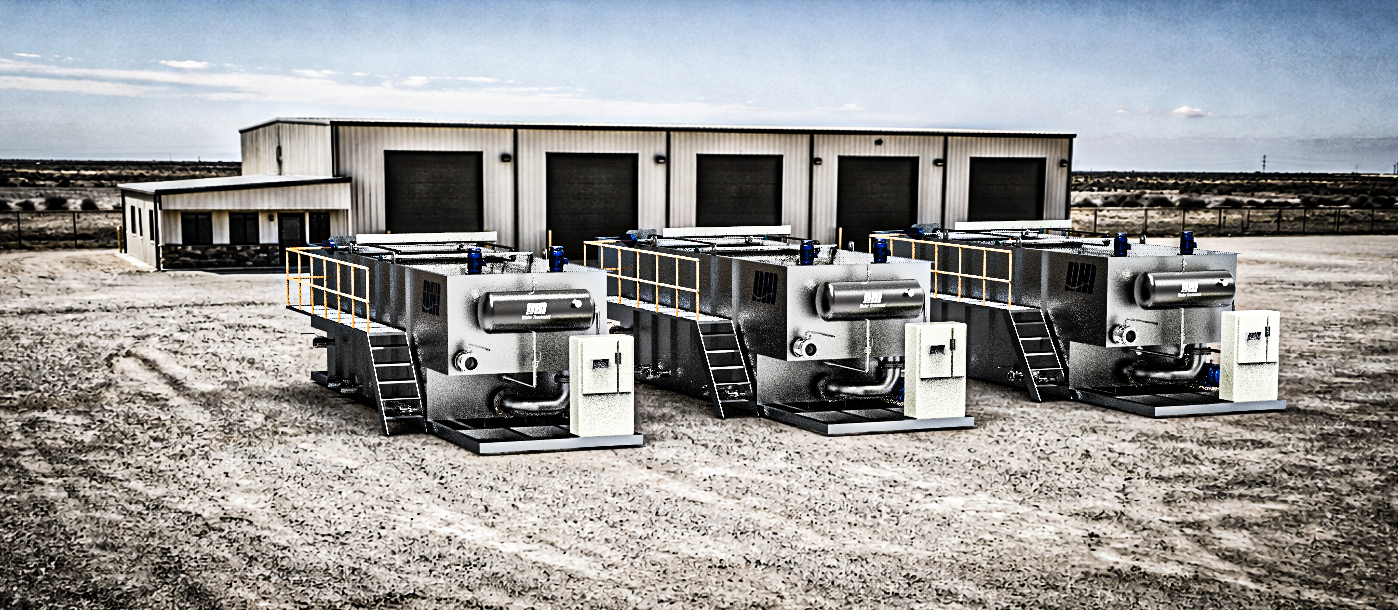
ATLAS PORTABLE DAF UNIT
What the ATLAS DAF Provides
The ATLAS DAF is designed to improve water quality by using fine air bubbles to lift oil, suspended solids, and chemically conditioned floc to the surface, where the separated material can be removed from the treatment stream.
The system is especially valuable where water contains free oil, suspended solids, emulsified oil, or chemically treatable contaminants that need to be separated before discharge, reuse, recycling, polishing, or downstream treatment.
| Solution Area | How ATLAS Helps |
|---|---|
| Oil removal | Separates free oil and chemically destabilized emulsified oil from water. |
| Solids removal | Floats suspended solids and flocculated particles for removal. |
| Produced water treatment | Supports oilfield water recycling, reuse, pretreatment, and polishing applications. |
| Industrial wastewater | Provides compact treatment for oil, solids, and suspended contaminant reduction. |
| Chemical treatment support | Improves coagulant and flocculant performance through controlled mixing and stable hydraulics. |
| Downstream protection | Reduces loading on filters, membranes, tanks, and polishing systems. |
| Mobile or fixed deployment | Skid-mounted package suitable for extended site deployment or fixed installation. |
Why DHI ATLAS
The ATLAS unit is more than a flotation tank. It is a complete engineered treatment system with practical features that support real-world field operation.
The DHI ATLAS DAF provides a compact, engineered, and field-practical water treatment platform for customers who need dependable oil and solids separation. With integrated chemical mixing, controlled whitewater aeration, accessible operation, and DHI-built critical components, ATLAS is designed to help customers improve water quality, reduce downstream treatment burden, and create a more reliable path toward water reuse, recycling, or discharge readiness.
| Advantage | Description |
|---|---|
| Purpose-built engineering | Designed specifically for industrial and oilfield water treatment duty. |
| Compact footprint | Approximately 35 ft x 10 ft skid-mounted package. |
| Integrated chemical mixing | Coagulant and flocculant mixing with velocity-controlled agitators. |
| Controlled aeration | Pressurized whitewater recycle system designed to generate fine flotation bubbles. |
| Operator-focused layout | Integrated walkway, accessible compartments, and practical instrumentation. |
| Stable hydraulics | Designed to support consistent flow, flotation, and effluent transfer. |
| DHI-manufactured components | Pumps, aeration components, and flotation internals are custom manufactured for the application. |
| Flexible application | Suitable for produced water, industrial wastewater, oil removal, and solids separation. |